How to Write a Scene Heading (Slugline): Rules and Examples
By Gireesh Shanbbhag, Actor | Filmmaker | Screen Writer | Editor · Published 2026-09-09
Quick answer: A scene heading (slugline) opens every new scene and has three parts, in capital letters: INT. or EXT. (interior or exterior), the location, and the time of day, separated by a hyphen — for example INT. RAILWAY WAITING ROOM - NIGHT. Write a new heading whenever the location or time changes.
Key takeaways
Format: INT./EXT. + LOCATION + " - " + TIME, all caps, flush left.
Use simple time words — DAY, NIGHT, MORNING, EVENING, CONTINUOUS, LATER.
Keep location names identical every time you return to a place; schedules are built from them.
Use secondary headings for rooms within the same location.
Why do scene headings matter so much?
The scene heading is the most "production" line in a screenplay. The assistant director groups scenes by location and time of day to build the shooting schedule, the location manager scouts from them, and the cinematographer plans lighting around DAY or NIGHT. A vague or inconsistent heading creates real costs.
Part 1: INT. or EXT.
INT. — inside a structure (a house, a bus, a car).
EXT. — outdoors (a street, a field, a rooftop).
INT./EXT. — the scene moves between inside and outside, or we see both, such as characters driving with the road visible: INT./EXT. AUTO-RICKSHAW - MOVING - DAY.
Part 2: The location
Name the location as specifically as the production needs, and no more. Go from general to specific with a hyphen: INT. RAVI'S HOUSE - KITCHEN - NIGHT. Use the same wording every time — "RAVI'S HOUSE" should never become "RAVI'S HOME" later, or software will treat it as a second location.
Part 3: Time of day
Most scripts only need DAY or NIGHT. Use more specific times only when they matter on screen — DAWN, SUNSET or EARLY MORNING for a specific light. Two special terms:
CONTINUOUS — the action flows directly from the previous scene without a time jump (a character walks from the hall into the kitchen).
LATER — same location, some time has passed.
What are secondary scene headings?
When a character moves between rooms in a location you have already established, you can use a short heading with just the room name: KITCHEN or BACK VERANDA. This keeps the page clean while still telling the crew where we are.
How do you write flashbacks, dreams and intercuts?
Flashback: INT. SCHOOL CLASSROOM - DAY (FLASHBACK - 1998), then BACK TO PRESENT or a new heading when it ends.
Dream: EXT. ENDLESS PADDY FIELD - DAY (DREAM).
Phone call intercut: establish both locations once, then write INTERCUT - RAVI / MEERA and let the dialogue run without repeating headings.
Montage: MONTAGE - MEERA PREPARES FOR THE AUDITION, followed by short lettered or bulleted beats, then END MONTAGE.
Examples of good and bad scene headings
Good: EXT. MYSURU PALACE GROUNDS - NIGHT
Good: INT. KSRTC BUS - MOVING - DAWN
Bad: Inside the house in the evening time (not formatted, vague)
Bad: INT. HOUSE (no time of day; which house?)
Bad: EXT. BEACH - 4:37 PM (too precise unless a clock is shown)
Should scene headings be in English in a Kannada or Hindi script?
Usually yes. Even when dialogue is written in Kannada, Tamil or Hindi, most productions keep headings in English so crew and software can read them. See how to write a screenplay in Kannada.
How to write scene headings faster
In Kathe Kaara, press Cmd/Ctrl + 1 for a scene heading. The editor autocompletes locations you have already used, so names stay consistent, and the scene navigator lists every heading so you can jump around the script. Headings are parsed automatically into INT/EXT and day/night for breakdowns and reports.
Frequently asked questions
Are scene headings numbered?
Not in spec scripts. Scene numbers are added to shooting scripts once the script goes into pre-production.
Do scene headings need a period after INT and EXT?
Yes. INT. and EXT. are abbreviations and take a period.
Can I bold or underline scene headings?
Some writers bold them for readability, and it is generally accepted. Underlining is less common. Never change the font.
How often should I write a new scene heading?
Every time the location or the time changes. If the camera would have to move to a new place or jump in time, start a new scene.
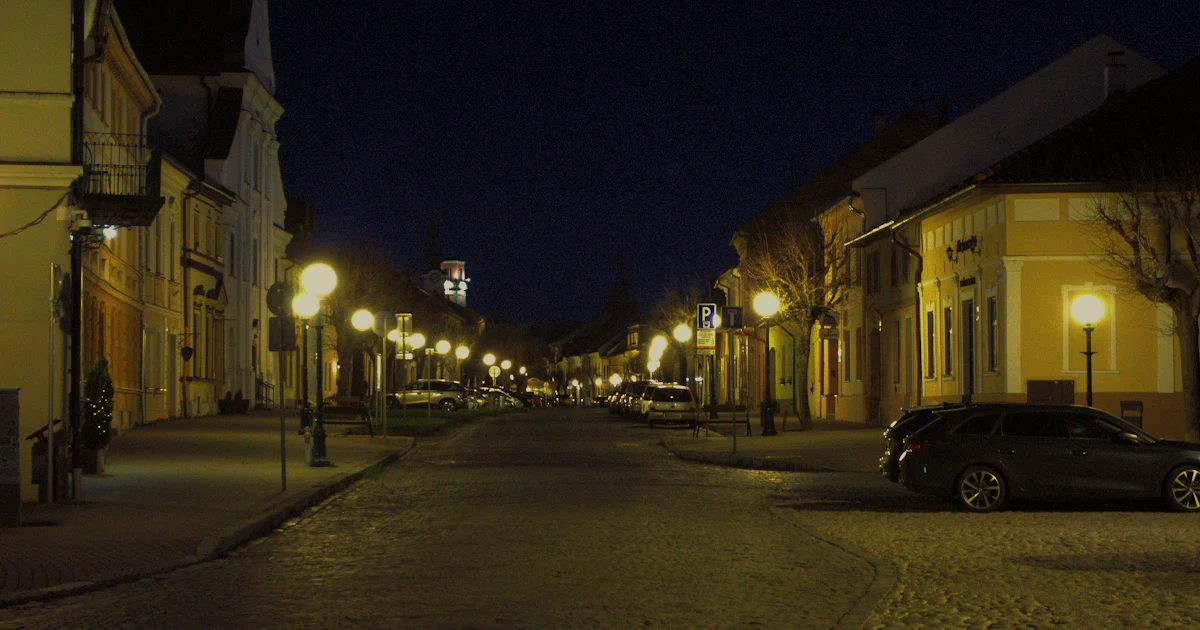
Cover photo: Empty street at night — an EXT. NIGHT scene location — by Juraj Martinák on Unsplash.