How to Make a Shot List: Shot Sizes, Angles, Movements and a Free Template
By Gireesh Shanbbhag, Actor | Filmmaker | Screen Writer | Editor · Published 2026-09-15
Quick answer: A shot list is a numbered list of every shot you plan to film in each scene. For each shot, record the scene and shot number, a short description, shot size (wide, medium, close-up), camera angle, camera movement, lens, which characters are in frame and any equipment or notes. Build it from the locked script, then share it with the cinematographer and 1st AD to plan the shooting day.
Key takeaways
Make the shot list per scene, after the script is locked and before the schedule is finalised.
Standard columns: shot number, description, size, angle, movement, lens, cast, equipment, estimated setup time.
Number shots as scene + letter (14A, 14B) so they match slates and camera reports.
Pair the shot list with a storyboard for complex sequences.
What is the difference between a shot list and a storyboard?
A shot list is text: a table of shots with technical details. A storyboard is visual: drawings or reference frames showing composition. Most productions use a shot list for every scene and storyboards only for action, VFX or emotionally critical moments.
What should a shot list include?
Scene number and shot number (14A, 14B, 14C).
Description — what happens in the shot: "Meera enters, sees the broken lamp".
Shot size, camera angle and camera movement.
Lens or focal length.
Cast in frame, using cast IDs from the script breakdown.
Equipment — gimbal, slider, drone, crane.
Sound — sync sound, wild track or MOS (no sound).
Estimated setup and shoot time and notes.
What are the standard shot sizes?
Extreme close-up (ECU) — eyes, a ring, a trembling hand.
Close-up (CU) — face fills the frame.
Medium close-up (MCU) — head and shoulders.
Medium shot (MS) — waist up.
Medium long / cowboy shot — mid-thigh up.
Full shot (FS) — head to toe.
Wide / long shot (WS) — character within the environment.
Extreme wide (EWS) — landscape, character small in frame.
Establishing shot — introduces a location.
Over-the-shoulder (OTS) and two-shot — for conversations.
Insert — a detail cut into the scene, such as a phone screen.
Aerial — from a drone or helicopter.
What camera angles and movements should I know?
Angles: eye level, high angle, low angle, overhead (bird's-eye), Dutch angle, over-the-shoulder and point of view (POV).
Movements: static, pan, tilt, dolly in/out, truck (sideways), pedestal, crane/jib, handheld, Steadicam/gimbal, tracking, zoom and whip pan.
Lenses: wide, normal, telephoto, macro, fish-eye and anamorphic — each changes how space and faces feel.
How do you make a shot list, step by step?
Read the scene and write its dramatic purpose in one line.
List the coverage you need: an establishing or master shot, then mediums, close-ups and inserts.
Choose size, angle, movement and lens for each shot based on emotion, not habit.
Order shots by setup (all shots from one camera position together) to save lighting time.
Estimate time per setup and check it against the day's schedule.
Review with the cinematographer and 1st AD, then lock and share.
Shot list example
Scene 22 — INT. HOSPITAL CORRIDOR - NIGHT
22A · Wide · Eye level · Static · 24mm · Ravi waits alone · Sync
22B · MCU · Eye level · Slow dolly in · 50mm · Ravi hears the door · Sync
22C · POV · High angle · Handheld · 35mm · Doctor approaches · Sync
22D · Insert · Overhead · Static · 100mm macro · Ravi's clenched fist · MOS
How to build a shot list in Kathe Kaara
Kathe Kaara creates a shot list for each scene of your screenplay with dropdowns for 12 shot sizes, 7 camera angles, 12 movements and 6 lens types. You can drag to reorder shots, upload storyboard frames for each shot, link shots back to script lines, and export the shot list to PDF or CSV for the crew.
Frequently asked questions
Who writes the shot list?
The director, usually with the cinematographer. The 1st AD uses it to schedule the day.
How many shots are there per page of script?
It varies widely — a dialogue scene may need four to eight setups per page, an action scene many more. Estimate from your shot list, not from page count.
Is a shot list necessary for a short film?
Yes. On small crews with limited time, a shot list is what keeps the day on schedule.
Can I export a shot list to Excel?
Yes — export as CSV and open it in Excel or Google Sheets.
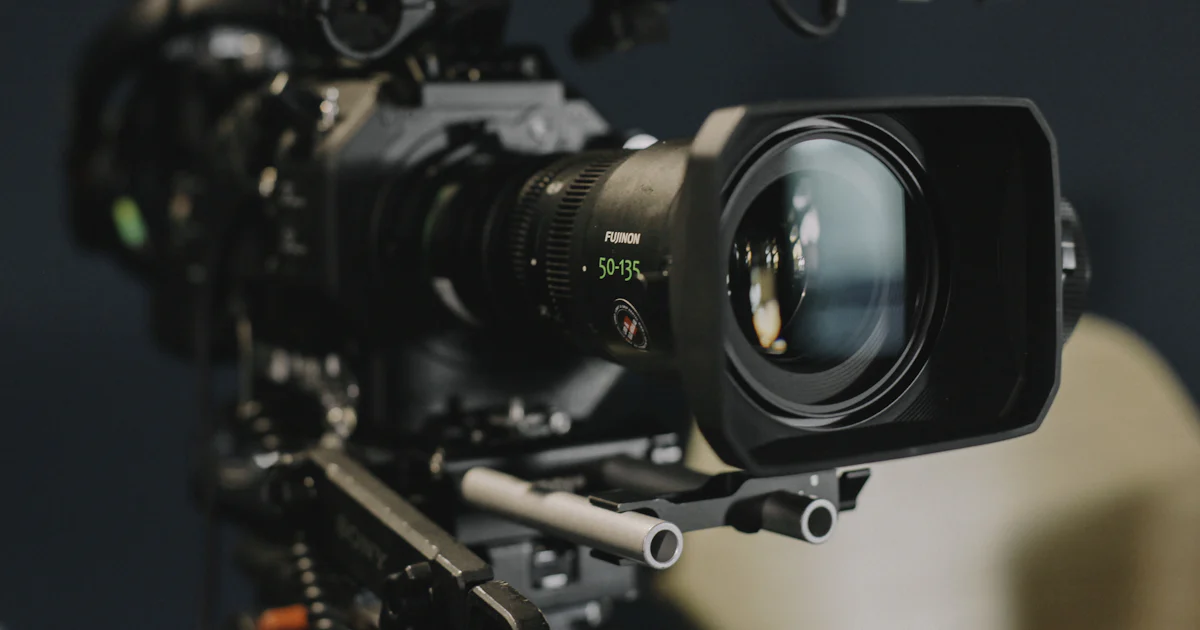
Cover photo: Cinema camera rig used to film a shot list — by Vanilla Bear Films on Unsplash.