Screenplay Format: The Complete Guide to Industry-Standard Formatting
By Gireesh Shanbbhag, Actor | Filmmaker | Screen Writer | Editor · Published 2026-09-03
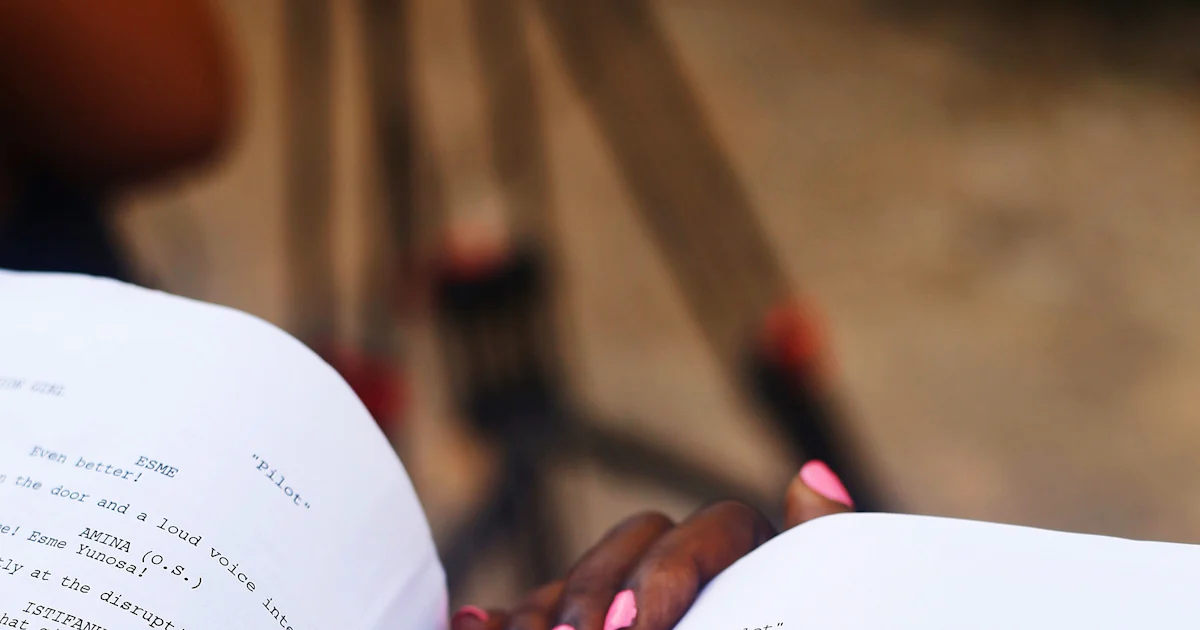
Quick answer: Industry-standard screenplay format uses 12-point Courier (or Courier Prime) on US Letter or A4 pages, a 1.5-inch left margin and roughly 1-inch top, right and bottom margins. Scene headings, action and transitions run full width; character names sit about 3.7 inches from the left edge, dialogue in a narrower block about 2.5 inches from the left edge. Formatted this way, one page equals about one minute of screen time.
Key takeaways
Font: 12 pt Courier or Courier Prime — monospaced type is what makes "one page ≈ one minute" work.
Margins: 1.5" left (for binding), about 1" right, top and bottom.
Nine elements: scene heading, action, character, dialogue, parenthetical, transition, shot, general and centered text.
Write in present tense and describe only what can be seen and heard.
Screenwriting software applies all of this automatically, so you can focus on the story.
Why does screenplay format matter?
Format is not decoration — it is a production tool. Because every formatted page holds about the same amount of screen time, producers estimate runtime and budget from page count, assistant directors schedule in eighths of a page, and readers can judge pacing at a glance. A script that ignores format signals inexperience before anyone reads the story.
Page setup: font, margins and spacing
Font: Courier, Courier New or Courier Prime, 12 point.
Paper: US Letter (8.5" × 11") in the US; A4 is common in India and Europe. Keep the same margins either way.
Left margin: 1.5 inches. Right margin: 0.5–1 inch. Top and bottom: about 1 inch.
Page numbers: top right, followed by a period. The first page is usually not numbered.
Spacing: single-spaced within an element, one blank line between elements.
The nine screenplay elements
1. Scene heading (slugline)
Starts every scene. It states interior or exterior, the location, and the time: INT. POLICE STATION - NIGHT. Always in capitals and flush left. Full rules in our scene heading guide.
2. Action
Describes what we see and hear, in present tense, flush left across the full width. Keep paragraphs to three or four lines so the page breathes. Introduce a character the first time in capitals with an age: RAVI (30s), soaked from the rain, pushes the door open.
3. Character
The speaker's name in capitals, about 3.7 inches from the left edge. Extensions go after the name: (V.O.) for voice-over, (O.S.) for off-screen, (CONT'D) when the same character continues after action.
4. Dialogue
The spoken words, in a block roughly 2.5 inches from the left edge and about 3.5 inches wide. See how to write dialogue for craft tips.
5. Parenthetical
A brief direction under the character name — (whispering), (to Meera) — about 3.1 inches from the left edge. Use it only when the line would be misread without it.
6. Transition
Right-aligned, in capitals: CUT TO:, DISSOLVE TO:, MATCH CUT TO:. Modern spec scripts use them sparingly. See our guide to transitions.
7. Shot
Calls out a specific camera view — CLOSE ON, ANGLE ON, INSERT. Common in shooting scripts, rare in spec scripts.
8. General
Free text such as notes, song placeholders or montage labels.
9. Centered text
Used for THE END, INTERVAL, title cards or "FADE IN:" in some styles.
What does a correctly formatted page look like?
EXT. MAJESTIC BUS STAND - NIGHT
Rain hammers the tin roof. RAVI (30s) checks his phone — no signal.
RAVI
(muttering)
Last bus. Of course.A headlight sweeps across him.
CUT TO:
What are the most common formatting mistakes?
Using a proportional font such as Arial or Times New Roman — page count no longer predicts runtime.
Writing camera directions in every scene of a spec script.
Long, novel-style action paragraphs.
Overusing parentheticals to direct the actor.
Inconsistent character names (RAVI in one scene, RAVI KUMAR in the next).
Scene headings without a time of day.
Does Indian cinema use a different format?
Many Indian productions historically used a two-column "audio–visual" format, with visuals on the left and dialogue on the right, and some still do. Increasingly, writers and OTT platforms expect the Hollywood-style single-column format described here, because it works with breakdown, scheduling and budgeting tools. Dialogue can be written in any language — see writing a screenplay in Kannada.
How to format a screenplay automatically
Dedicated screenwriting software handles margins and element styles for you. In Kathe Kaara you press Tab or Enter to cycle between elements, or Cmd/Ctrl + 1–9 to jump straight to one, and the page is formatted as you type. Exports to PDF include proper MORE and CONT'D handling at page breaks, and you can also export to Fountain or Final Draft (.fdx).
Frequently asked questions
What font is used for screenplays?
12-point Courier or a Courier variant such as Courier Prime. Its fixed width keeps one page close to one minute of screen time.
What are the margins for a screenplay?
About 1.5 inches on the left, 1 inch at the top and bottom, and 0.5 to 1 inch on the right. Dialogue sits roughly 2.5 inches from the left edge.
Is it OK to write a screenplay in Microsoft Word?
It is possible with templates, but page breaks, CONT'D markers and element styles are hard to maintain. Free screenwriting software is faster and more accurate.
Should a screenplay be written in present tense?
Yes. Action describes what is happening on screen now, so it is always written in present tense.
Do I need a title page?
Yes. Include the title, "Written by" and your name centered, with contact details at the bottom left. Leave out dates and draft numbers on spec scripts.
Cover photo: Hand resting on an open screenplay with a camera behind — by Muhammad-Taha Ibrahim on Unsplash.